Projects / PlanTEA-WM
PlanTEA-WM
A collaborative, multi-user web platform with AI for planning pictogram-based routines for autistic people.
- My role
- Lead developer: backend, database, user interface and LLM integration
- Period
- 2023 – 2025, on project-based contracts in R&D and technology transfer
- Context
- CHICO research group, University of Castilla-La Mancha. It was also my Bachelor's thesis
- Code
- Private project repositories
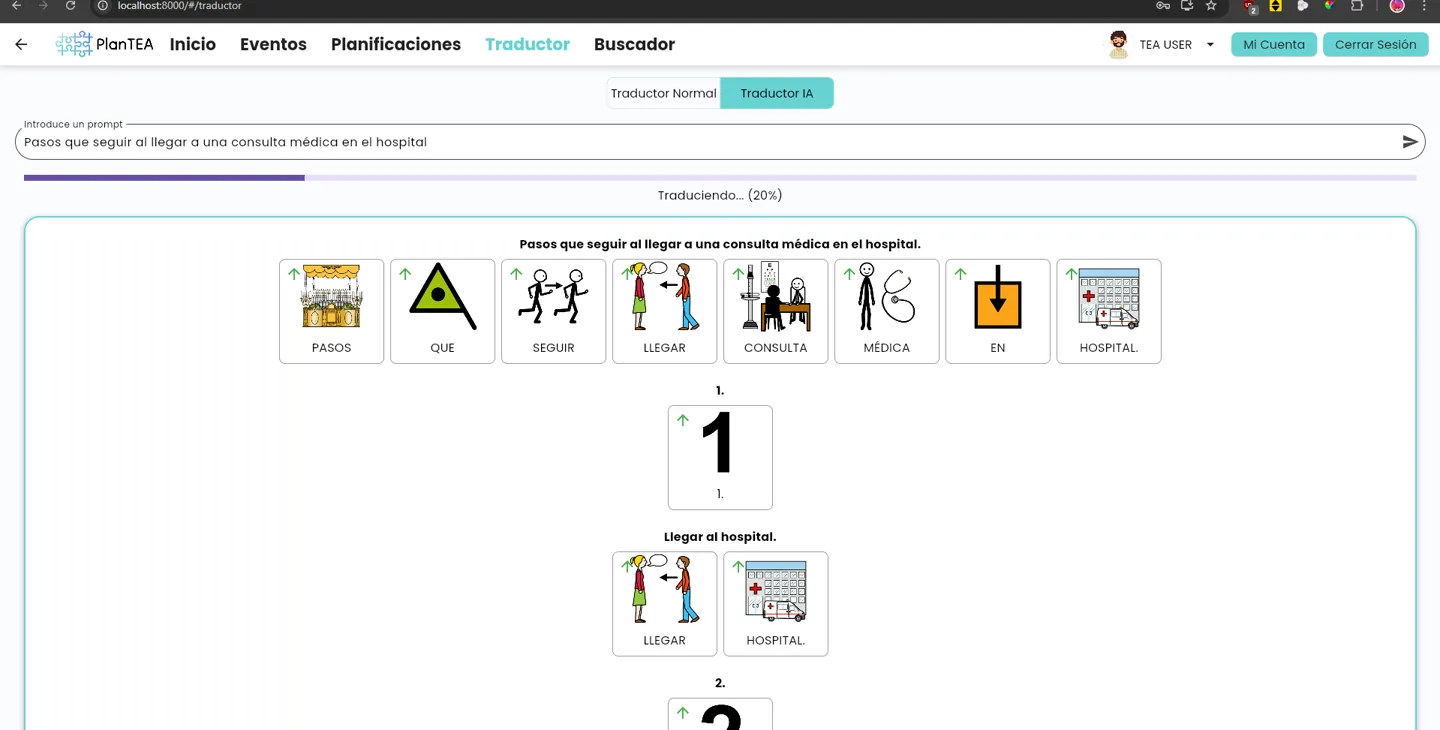
Demo

The video is in Spanish and loads from YouTube when you click. You can also watch it on YouTube.
Screenshots and diagrams
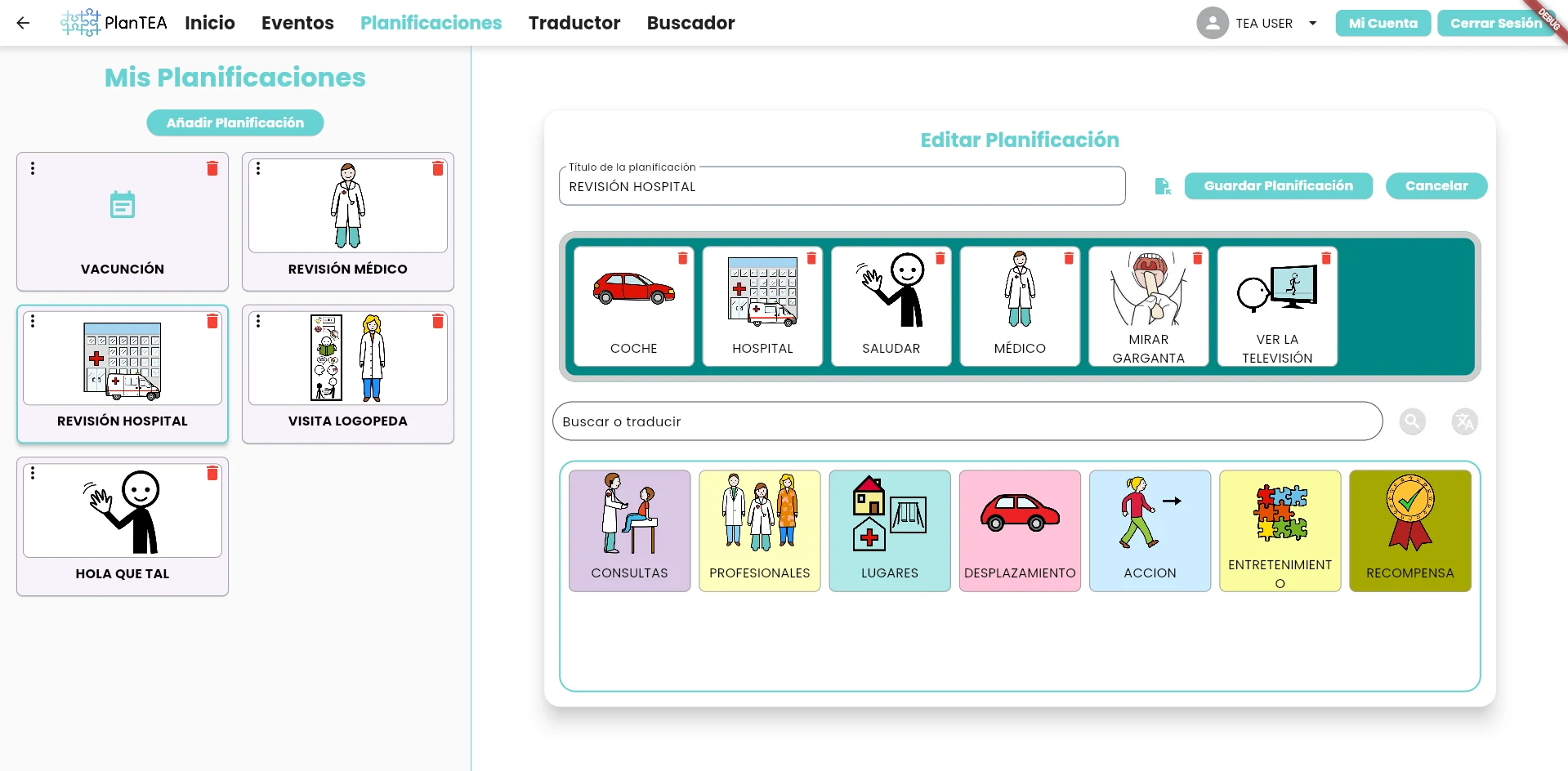
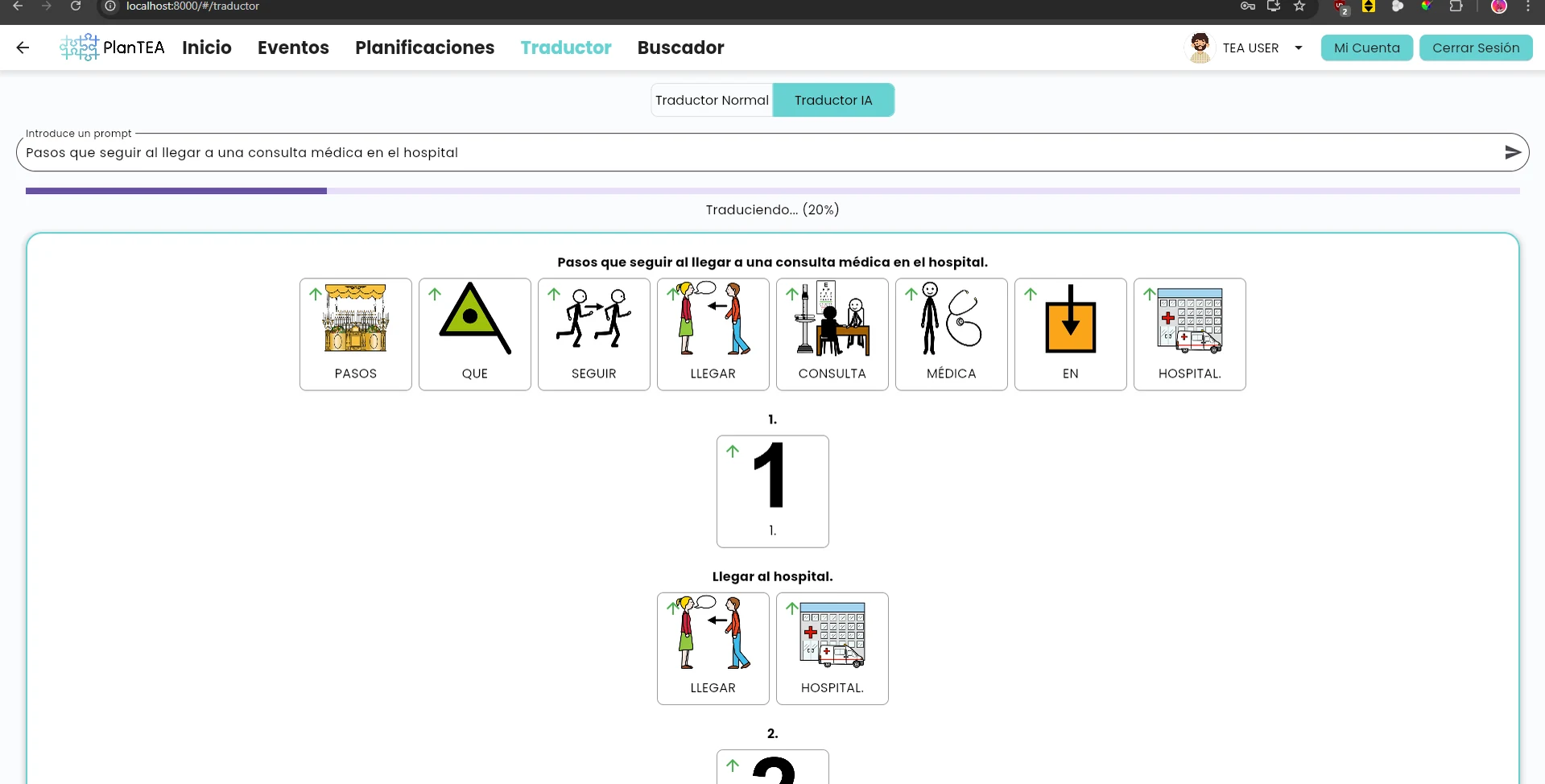
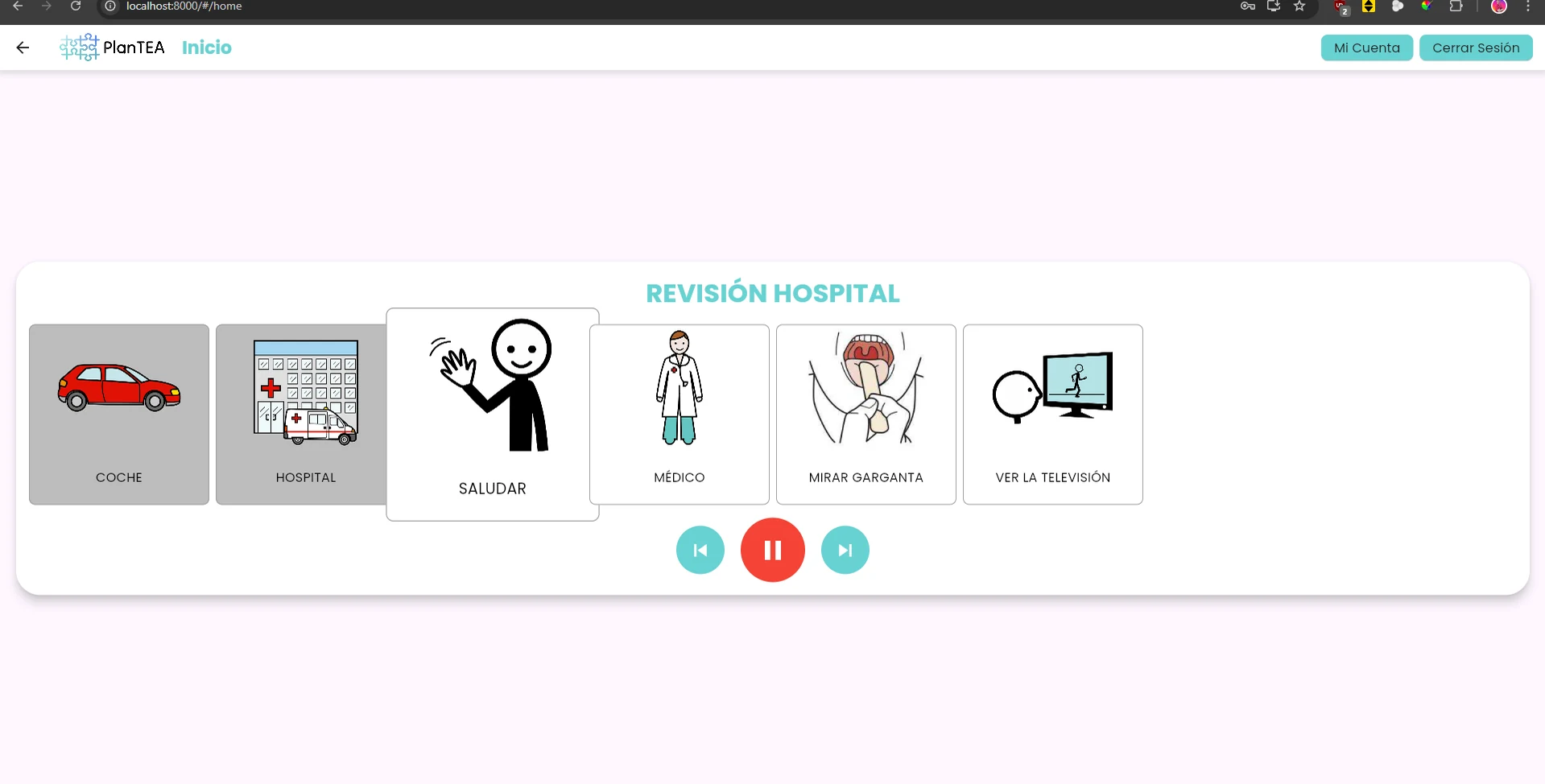
Images from my Bachelor's thesis (the interface is in Spanish). Swipe or use the arrows; click an image to view it full screen.
The problem
Knowing what is going to happen helps many autistic people cope with everyday situations, such as a visit to the doctor. PlanTEA was an Android app, built by other authors, for preparing those situations with pictogram sequences.
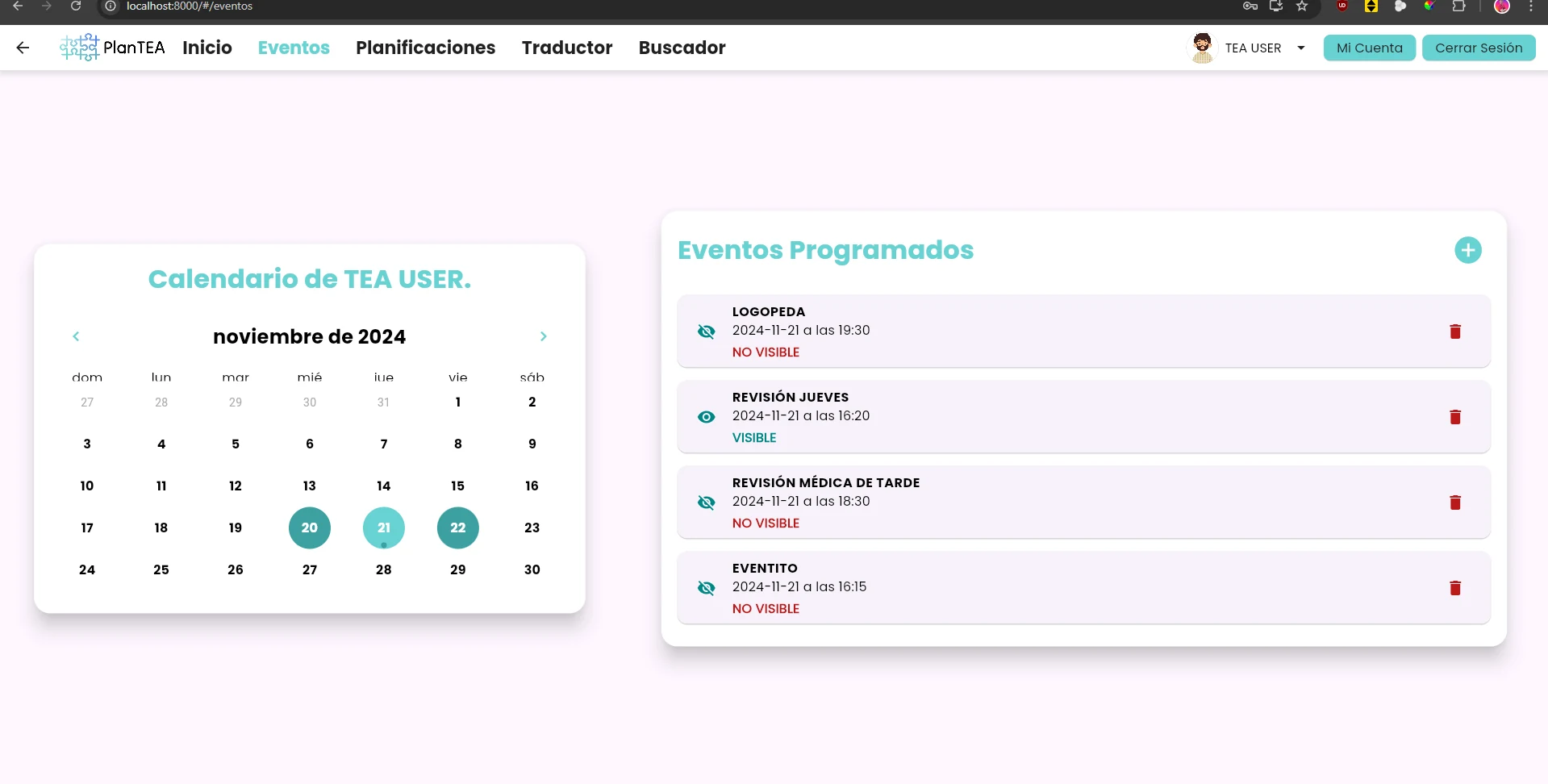
The goal of PlanTEA-WM was to bring it to the web and turn it into a collaborative platform: families and professionals working on the same plans, with a shared calendar and AI support for creating routines.
What I did
- Backend and REST API with Node.js and Express, following an MVC structure.
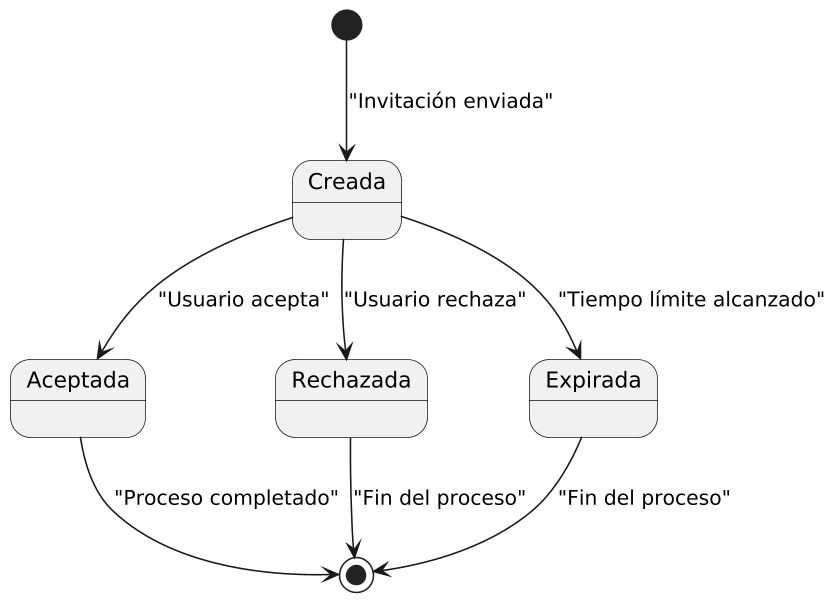
- PostgreSQL data model: users and roles, a shared calendar and email invitations with tokens and states (pending, accepted, rejected and expired).
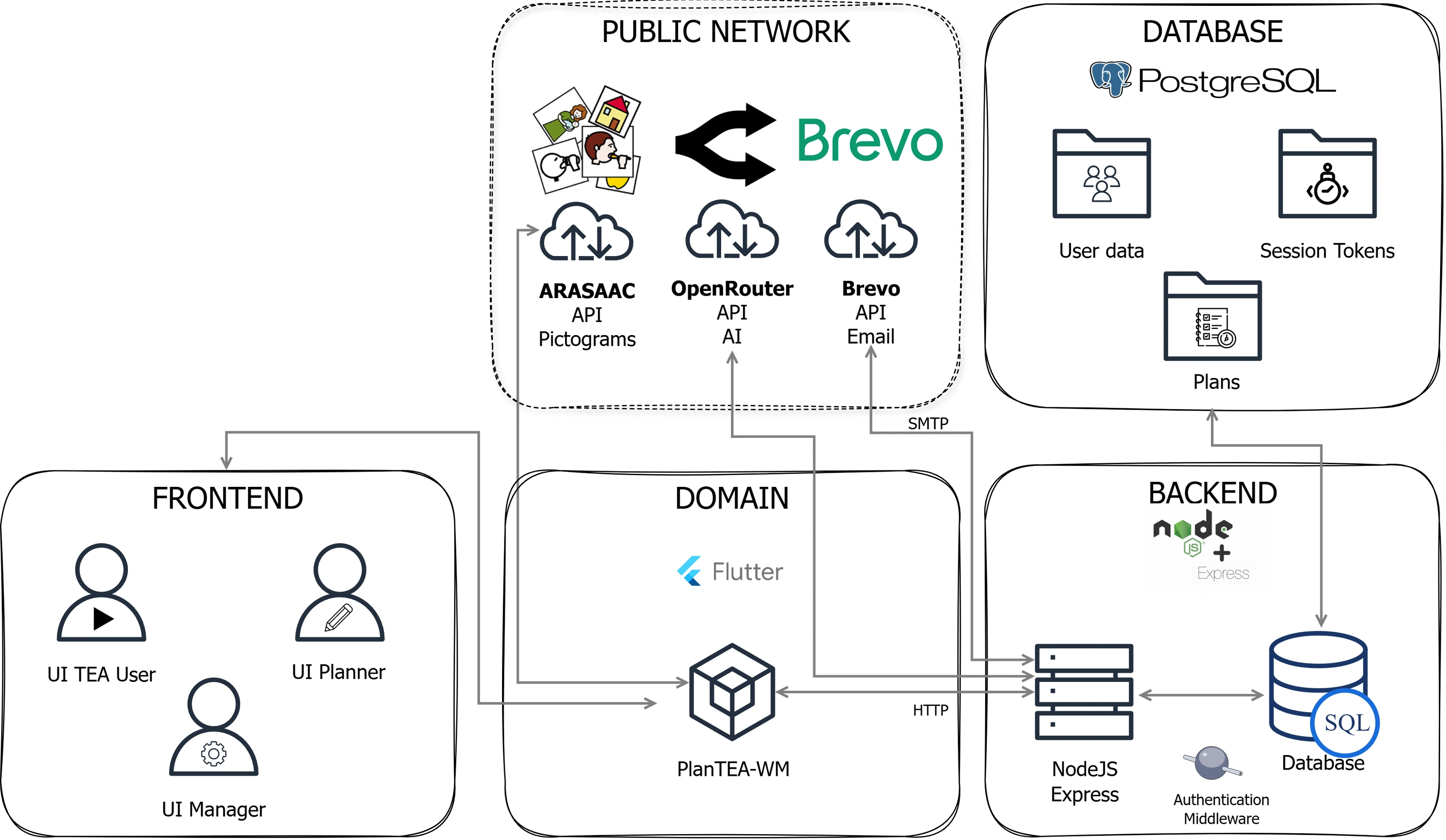
- LLM integration that turns text into pictogram routines, with streamed responses. Access to the model (OpenRouter) and to email (Brevo) is wrapped in the backend.
- Flutter Web interface with an MVVM architecture, following WCAG 2.1 guidelines: contrast, keyboard navigation and visible focus.
- Export of plans to XML and PDF, and import from XML.
- Version control with Git and GitHub using Gitflow.
Architecture
A Flutter Web client talks to a REST API in Express, the only component with access to the database and to the services that need credentials. Press «Play a request» to follow a routine created with AI through the system.
Client
- Flutter WebMVVM interface, accessible according to WCAG 2.1
- ARASAACPictogram library, queried from the client
Server
- REST API in Node.js and ExpressMVC architecture
- Users and roles
- Shared calendar
- Invitations with tokens and states
- AI routines, streamed
- Export to XML and PDF
Data and services
- PostgreSQLRelational data model
- OpenRouterAccess to the LLM
- BrevoSends the email invitations
Built by meExternal service
How a routine created with AI flows through the system, step by step.
Technologies
- BackendNode.js, Express, REST API
- DatabasePostgreSQL
- FrontendFlutter Web (Dart)
- AILLM through OpenRouter, streamed
- ServicesARASAAC (pictograms), Brevo (email)
- AccessibilityWCAG 2.1 guidelines
- ProcessGit, GitHub and Gitflow
Results
- 46 participantsin the preliminary evaluation: 33 professionals, 11 family members and 2 people with other profiles. I took part in its validation with therapists and autism associations.
- IEEE Access, 2025Article as first author, plus another one in AIPO's journal Interacción. Read the article (DOI)
- Bachelor's thesis: 10/10 with HonoursAIPO Best Bachelor's Thesis Award and the Cojali Award for the best Bachelor's or Master's thesis (Turing Machine Awards), both in 2025.
- Speaker at seminarsCiudad Real (2024) and Toledo (2025), on technology for autistic people.